
Oumi – Story Roleplay Worlds
Oumi DeveloperEntertainment
3.476.00 Reviews
- Version
- 1.1.7
- Installs
- 100.00K
- Age Rating
- Mature 17+
Screenshots

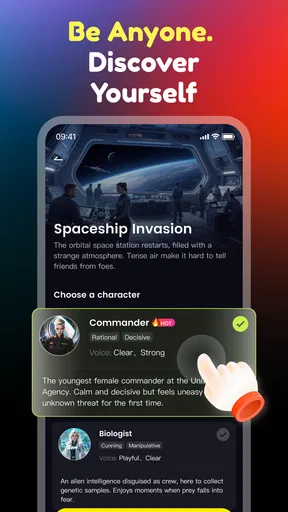

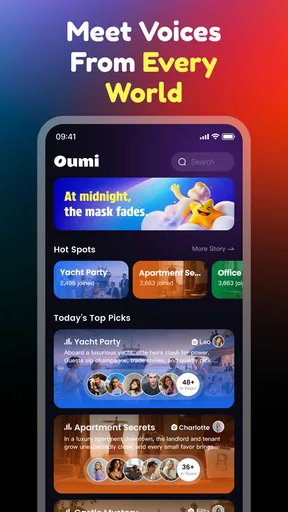
Our Review of Oumi – Story Roleplay Worlds
 Analysis by Appyee
I approached Oumi – Story Roleplay Worlds as an entertainment app for anyone who enjoys stepping into character-driven stories rather than simply watching them. Its central idea is easy to understand: you play characters and shape tales. That sounds simple, but the appeal depends on how much freedom the experience gives you and how comfortable you are with guiding a story yourself.
My overall impression is that Oumi is most interesting when I treat it as a creative conversation space, not as a conventional game with a fixed campaign. I can imagine opening it when I want a quick fictional escape, testing a character idea, or exploring a scene at my own pace. It is less suitable if I want polished graphics, a clearly defined win condition, or a complete story that unfolds without my input.
The app is free to install, although optional purchases range from $0.99 to $199.99 per item. That wide range makes it worth paying attention to how far the free experience takes you before spending anything. Oumi is rated for Mature 17+ users, so I would not treat it as a general family entertainment app, even if a particular story appears harmless at first.
How Oumi feels in its current form
Oumi comes from Oumi Developer and sits in the entertainment category rather than presenting itself as a traditional action, puzzle, or strategy title. That distinction matters. The main attraction is the act of inhabiting a role and influencing a fictional situation. If you enjoy making choices, experimenting with personalities, and seeing where a scene leads, the format can feel more personal than passively consuming a show.
I find this kind of app works best in short, focused sessions. A few minutes can be enough to continue a conversation or test a new direction, while a longer session is better reserved for users who enjoy building momentum inside a fictional world. The experience asks for attention because the fun comes from responding thoughtfully, not from tapping through a queue of identical screens.
The store summary, “Play Characters, Shape Tales,” captures the broad concept, but it does not explain the practical question most new users have: what should I do first? My advice is to begin with a simple role and a clear intention. Instead of trying to create an elaborate personality immediately, decide whether you want a mystery, a dramatic exchange, a light adventure, or a character study. A narrow starting point makes the first interaction easier to judge.
One useful habit is to treat each session like a small writing exercise. Give your character a recognizable goal, respond consistently, and notice which choices make the story more engaging. This approach helps avoid the common problem of roleplay becoming a string of disconnected replies. Oumi is more rewarding when I bring a little structure to it, even though the point is to leave room for surprise.
The app has attracted over 100 thousand installs and holds a 3.4 average from around 632 ratings. That combination suggests a product with a real audience but also mixed reactions. I would read the rating as a reason to keep expectations measured rather than as a reason to dismiss the app. Roleplay tools are unusually dependent on personal taste: one person may enjoy open-ended scenes, while another may find the lack of firm direction frustrating.
What the recent version tells me
The current version is 1.1.7, and the app was released on September 22, 2025. Those details place Oumi in an early stage of its product life rather than in the category of a long-established entertainment platform with years of visible refinement. I see that as both an opportunity and a caution. A newer app can still be finding its identity, but users should expect the experience to evolve instead of assuming every rough edge is permanent.
It is important not to confuse a version number with a promise about what has changed. The current release is the version I would evaluate today, but a number alone does not tell me whether the biggest progress has been in storytelling, navigation, stability, or presentation. What I can say is that the app has moved beyond a first public build and now gives new users a defined current version to try.
For someone who used an earlier release, the sensible approach is to revisit the parts that affected daily use most: how quickly a story gets moving, how easy it is to maintain a character’s identity, and whether returning to an unfinished idea feels natural. Those are the changes that matter more than a cosmetic adjustment because they determine whether Oumi becomes a repeat-use app or a one-evening curiosity.
I would also keep expectations realistic about continuity. A roleplay experience can be enjoyable in a single scene but less satisfying when a user expects a long, carefully plotted narrative. Before investing time in a substantial story, I would test a smaller scenario and see whether the app supports the kind of consistency I want. That small trial is a better safeguard than assuming the newest version automatically solves every storytelling limitation.
Who benefits most from the interactive format
Oumi is a strong candidate for people who like collaborative fiction, improvisation, and character experimentation. It can suit a user who has a story idea but does not want to write a full chapter alone. It may also appeal to someone who enjoys exploring “what if” situations: what if a cautious character suddenly had to take a risk, or what if two people with opposing goals were forced to cooperate?
A realistic everyday use case would be a quiet evening after work. Instead of opening another fast-scrolling entertainment feed, I could choose a small scenario, play one character for fifteen minutes, and stop after reaching a natural turning point. The benefit is not only distraction; the activity gives me something to actively shape. For a writer, that can loosen up ideas. For a casual user, it can provide a more involved break than watching short clips.
Another practical use is character rehearsal. I can use a roleplay scene to explore how a fictional personality might react under pressure before writing that character into a larger project. The key is to keep notes outside the app if the idea matters to me. Treating the session as a disposable experiment makes it easier to try unusual choices without worrying about protecting a perfect storyline.
I would not recommend it first to someone who wants a conventional mobile game. There is no reason to approach Oumi expecting the clear progression of a puzzle title, the direct competition of a multiplayer battle, or the carefully staged presentation of a visual novel. Users who prefer defined objectives may feel that too much responsibility is placed on them to create the momentum.
It may also be a poor fit for anyone looking for children’s entertainment. The Mature 17+ rating should guide that decision, regardless of whether an individual scenario seems mild. Adults who are sensitive to unpredictable themes should likewise pay attention to the context of the stories they choose and avoid assuming that an open-ended roleplay app will always stay within a narrow tone.
Small techniques that make the experience better
The first technique I would use is to establish a “scene contract” in my opening message or setup. I would define where the scene begins, what my character wants, and what kind of mood I am aiming for. This prevents the interaction from drifting immediately and gives me a reference point when the story starts to wander. It is a simple step, but it creates a noticeable difference between purposeful roleplay and random conversation.
Second, I would introduce one limitation on purpose. A character who cannot lie, a deadline that cannot be ignored, or a location that restricts movement gives the scene shape. Open-ended storytelling can become vague when everything is possible, so a constraint creates useful pressure. This is one of the most effective ways to get more value from Oumi without needing a complicated premise.
Third, I would end sessions at a decision rather than waiting until the interaction feels exhausted. Stopping just before a meaningful choice leaves me with a clear reason to return and makes the story easier to resume. It also reduces the chance that a promising idea will fade into repetitive exchanges. For short mobile sessions, this is more practical than trying to complete a full narrative every time.
A fourth tip is to separate experimentation from commitment. I would use quick scenes to test voice, conflict, and relationships, then reserve longer sessions for ideas that genuinely hold my attention. This avoids spending too much time polishing a premise that sounded exciting for only a few minutes. It also makes the app useful even when a particular story does not work, because the failed attempt can still reveal what kind of character or situation I prefer.
Finally, I would be cautious with purchases until I understand my own usage pattern. Since the app is free but offers items from $0.99 up to $199.99, I would not buy simply because a prompt or story makes the moment feel urgent. I would first decide whether I am returning regularly and whether the purchase improves the specific kind of roleplay I actually enjoy. The price range makes deliberate spending especially important.
Where it falls short compared with familiar alternatives
Compared with a standard visual novel, Oumi appears more flexible because the user has a greater role in shaping the exchange. The trade-off is that a visual novel usually provides stronger authorial control, more predictable pacing, and a finished dramatic structure. If I want a story with carefully timed reveals and a guaranteed conclusion, the traditional format is likely the better choice.
Compared with a writing app, Oumi offers more immediate interaction. I do not have to create every line from an empty page, which can make starting easier. However, a writing app gives me direct ownership of the prose, editing tools, and a clearer way to preserve a polished draft. I would use Oumi for discovery and improvisation, then move important ideas into a dedicated writing space.
Compared with passive streaming entertainment, Oumi demands more mental participation. That is its main strength and its main cost. I can influence the direction, but I also have to supply imagination and judgment. When I am tired and want a finished episode, a streaming service is more convenient. When I want to play with a premise instead of merely receiving one, Oumi has the stronger appeal.
Compared with a conventional role-playing game, the app may feel lighter and more immediate, but it does not replace the satisfaction of exploration systems, character progression, tactical decisions, or a designed world with rules. I would choose Oumi for conversational storytelling and choose a full role-playing game when I want a broader sense of achievement and mechanical depth.
Practical questions before installing
Will it work on an older phone? Oumi requires Android 7.0 or later, so users with devices below that threshold should not plan around it. For compatible phones, I would still leave enough free space and keep the operating system reasonably current, especially because newer entertainment apps can change over time. The minimum requirement is a useful starting point, not a guarantee that every device will feel equally comfortable.
Is the free version enough to judge the app? Yes, it is the right place to begin. I would use the free access to test three things: whether the roleplay style feels natural, whether I enjoy returning to the same story, and whether the app’s tone suits me. Only after answering those questions would I consider optional purchases. A free installation should be treated as an evaluation period, not as a promise that every possible experience is included without cost.
Can it replace a complete story game? I would not expect that. Oumi’s appeal is the act of shaping a tale, while a complete story game earns its value through authored scenes, progression, and a planned ending. If I want to be surprised by a writer’s exact choices, I would choose the latter. If I want to test my own choices and see how a scenario develops, Oumi is more relevant.
Is it useful for writers? It can be, provided I use it as an idea laboratory rather than a finished manuscript tool. I would test dialogue rhythms, character conflicts, and alternate reactions, then rewrite the strongest material myself. The app is most valuable when it helps me discover possibilities I would not have generated alone; it should not replace careful editing or personal creative control.
Should I install it for a group or family? I would be careful. The Mature 17+ rating makes it unsuitable as a default shared app for younger users. Even among adults, the experience is likely to work better as an individual creative activity unless everyone involved already agrees on the kind of roleplay they want to explore.
What I would watch as Oumi develops
Because Oumi is still relatively new, I would watch how consistently it supports returning users. The important sign of progress will be whether a good first scene can become a satisfying habit: starting quickly, keeping the character’s direction clear, and making it easy to resume without rebuilding the entire context. Those improvements would matter more to me than simply adding more surface-level choices.
I would also watch the balance between openness and guidance. Too little structure can leave new users unsure what to do, while too much structure would undermine the freedom that makes roleplay attractive. The best evolution would help beginners start confidently without taking away the ability of experienced users to create unusual scenarios.
Another area worth observing is the relationship between free access and optional spending. The app’s free entry point is valuable because it lowers the risk of trying an unfamiliar format. That advantage weakens if users feel pushed toward expensive items before they understand the experience. Clear value and restrained purchasing decisions will be important for building trust with people who are still deciding whether Oumi belongs in their regular entertainment routine.
With around 76 written reviews alongside its broader rating activity, there is already some visible user feedback for prospective installers to consider. I would look for recurring themes rather than focusing on one enthusiastic or negative comment. In an app built around personal storytelling preferences, patterns about usability and consistency are more useful than arguments over whether the concept is inherently enjoyable.
My recommendation after spending time with it
I see Oumi as a promising choice for adults who want interactive fiction with room for personal direction. Its strongest quality is not a single conventional game mechanic; it is the invitation to become part of the storytelling process. With a clear premise, a few boundaries, and realistic expectations, I can get more from it than the brief store wording suggests.
At the same time, I would not recommend installing it blindly for someone who prefers polished, linear entertainment. The mixed 3.4 average, the early version history, the Mature 17+ rating, and the optional purchase range all point to an app that deserves a thoughtful trial rather than automatic commitment. I would begin for free, test several short scenes, and decide based on whether the interaction feels creative or merely unfocused.
For me, Oumi – Story Roleplay Worlds works best as a flexible storytelling companion: something to open when I want to explore a character, improvise a difficult conversation, or turn a spare part of the evening into a small fictional experiment. It is not a replacement for a full role-playing game, a finished novel, or a professional writing suite. But if the idea of shaping a story sounds more appealing than simply consuming one, this entertainment app is worth a careful look.
Verdict
Strengths of Oumi – Story Roleplay Worlds
- Creative worlds and characters encourage imaginative roleplay.
- Flexible storytelling lets users shape scenes and outcomes.
- Suitable for short sessions or longer creative play.
- Offers a social-feeling experience without requiring live interaction.
- Appealing concept for fans of interactive fiction and character stories.
Limitations of Oumi – Story Roleplay Worlds
- Some features or content may require in-app purchases.
- Quality can vary between community-created worlds and scenarios.
- Roleplay conversations may occasionally feel repetitive.
- Requires a stable internet connection for much of the experience.
- Not ideal for users seeking action-focused gameplay or traditional goals.
Similar Picks in This Category
View All
Google Play Games
Google LLC3.9

Netflix
Netflix, Inc.4.8

YouTube Kids
Google LLC4.2

Disney+
Disney4.4

Prime Video
Amazon Mobile LLC4.7

Steam
Valve Corporation3.2
Frequently Asked Questions
What is Oumi – Story Roleplay Worlds?
Oumi – Story Roleplay Worlds is an interactive storytelling and roleplay app built around character-driven conversations and imaginative scenarios. It lets users explore fictional worlds, meet story characters, and participate in conversations that can develop in different directions. The experience is aimed at people who enjoy creative writing, roleplay, fantasy settings, and chat-based stories rather than traditional games with fixed objectives.
How does roleplay work in Oumi?
After choosing a world, character, or scenario, you can communicate through text and guide the story with your own responses. The app’s characters react to the situation and help move the narrative forward, making each interaction feel more personal than reading a standard story. Your experience may depend on how clearly and creatively you write, since detailed prompts usually create richer roleplay conversations.
Is Oumi – Story Roleplay Worlds free to download and use?
Oumi may be available to download without an upfront purchase, but some features, content, or extended usage can depend on the app’s current subscription model, credits, or in-app purchases. Before starting a long roleplay, it is worth checking the store listing and the payment screen carefully. Pricing, trial periods, limits, and available worlds can change with future updates.
Is Oumi suitable for children and teenagers?
Parents should review the app’s official age rating, privacy information, and community or content guidelines before allowing younger users to access it. Roleplay platforms can include mature themes, emotionally intense conversations, or user-created scenarios that are not appropriate for every age group. It is also sensible to discuss online privacy and remind children not to share real names, addresses, passwords, or other sensitive information.
Does Oumi require an internet connection, and what should I know about privacy?
Because Oumi relies on interactive conversations and remotely delivered story content, an active internet connection is likely needed for most or all of the main experience. Account and conversation data may be processed to provide the service, improve responses, or synchronize activity across devices. Before registering, read the app’s privacy policy and permissions, and avoid entering confidential personal, financial, or identifying information into roleplay chats.
